Overall, there are 34 rangers in the Bükk National Park Directorate. The tasks of rangers are very diverse. The original meaning is the care of a protected area. Their duties include maintenance work, invasive animals and plant control, species protection, and lead excursions in the national park and work on research activities. Often rangers have a topic in which they are specialised, so some rangers are particularly good with birds and others with insects or plants.
Attila was the first ranger we accompanied at work; he works in Szilvásvárad. We learned a lot from him about the relevance of biodiversity and why monocultures can be so dangerous for a forest. The biodiversity of plants in an area provides a habitat for many animals; therefore, controlled deforestation combined with controlled reforestation is relevant for maintaining biodiversity. For example, one of Attila's jobs is to control the felling of trees. If trees are felled in the wrong places, or there are too many, this can endanger the biodiversity in an area. Therefore, there are precise plans as to which trees may be felled. When drawing up these plans, the interests of the forestry industry and those of nature conservation have to be reconciled. Deadwood is also an essential part of the nutrient cycle in the forest, as it is decomposed by insects and fungi and thus provides nutrients for new plants. Therefore, it is essential not to take deadwood directly out of the forest but to leave it in the natural cycle for a few years. Furthermore, we saw the footprints of wolves and deer and learned a bit about the behaviour of these animals.
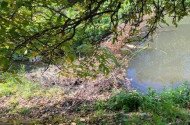
On the 14th of October, we counted water birds. Recording the population is vital to guarantee the protection of endangered species, so we can record how the resting populations are developing. If a bird species is threatened with extinction, it can be placed under species protection to ensure its continued existence. In addition, we have learned to understand the threat posed by invasive species; for example, a former exotic pet carelessly abandoned in nature can threaten native animals. We also saw beaver dams and understood their possible impact on plant growth around the dam.
In Verpelét, we participated in an invasive plant control, where we pulled out invasive bushes as they threatened the biodiversity of the meadows of Verpelét. By pulling out the invasive bushes, the space for native biodiversity should be restored. The fields provide a place for many flowers to bloom, but the bushes are a competition for the available minerals, so it is necessary to remove them.