We've now been here in Hungary for almost four months, and so much has happened since then. We've had many new experiences and learned a lot, grown beyond our own expectations, and met many new people and places. It feels like just yesterday that we arrived, and suddenly four months have passed. We've finally settled in properly and have even had visits from family members, to whom we could explain everything in detail. We also completed a thirty-hour Hungarian language course and are still learning the language. We've even visited other volunteers in Kunpeszér and Budapest, and in Kunpeszér, we were able to help with the volunteers' work in the Kiskunság National Park. After such a long time, you start to wonder what has actually happened since our arrival. Therefore, in the following texts, you'll find our experiences and adventures so far:
Szeleta Cave:
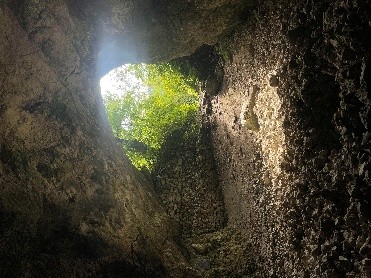
Our first task in the Bükk was to hike to the Szeleta Cave and film a video for our Facebook account. You can find it under the name: "Visit Bükk Region//Kulturweit diakok a Bükk-videk Geoparknal".
We were also supposed to check the information panels and report the location. After having to turn back the first time, we started our second attempt through the beautiful town of Lillafüred, past a waterfall and the Lake of Lillafüred, and then had to walk a short distance along the road until we reached the hiking trail. We enjoyed the stunning views. Everything was new and so exciting. Finally, we reached the Szeleta Cave. Inside the cave, we suddenly heard noises. They were bats! We filmed everything. Once we had our video footage and had photographed all the information panels (we hoped we had found them all), we headed back.
Bird Catching and Ringing Camp:
One of the most memorable events for us so far was the Bird Catching and Ringing Camp. We were picked up by car, and our day began at 4:00 a.m. in Tiszalúc. We were tired but very excited and set up nets on ledges between the reeds to catch passing birds.
Every hour, we checked the nets to make sure the birds were safe and to attach a small numbered ring to each bird's leg. This made it easier to identify and count them. We measured the birds' feathers, weight, body fat percentage, age, and gender, and recorded everything in a notebook.
We also learned some of the Latin names of the birds there.
We mainly caught singingbirds like blackbirds, robins, and blue tits. Of course, we released them after examining them.
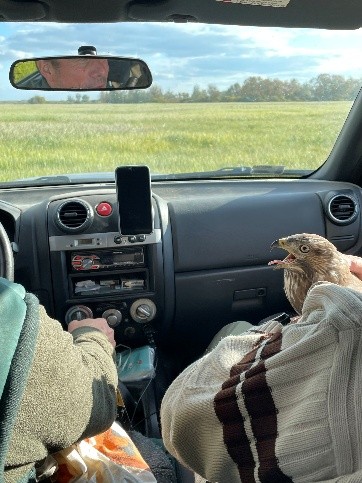
We also set up a larger net for raptors and were lucky enough to catch a common buzzard! That was very exciting, as the bird was transported to the visitors in the car and carried in Istvan's arms. In the evenings, we slept in tents and camped out in the middle of the wilderness. It was so exciting and not only a great adventure but also a huge advantage, since most birds are active in the early morning.
The bird ringing camp was a truly amazing experience! It made us realize that every small step, even just determining a bird's age, can contribute to nature conservation.
If we can understand how birds migrate, how large their current populations are, and identify resting places, we can draw conclusions not only about their well-being but also about the state of the landscape.
In the evenings, we slept in tents and spent the night in the wilderness. We have learned so much that every time we see or hear a songbird, our inner bird expert becomes active again!
Our First Guided Tour:
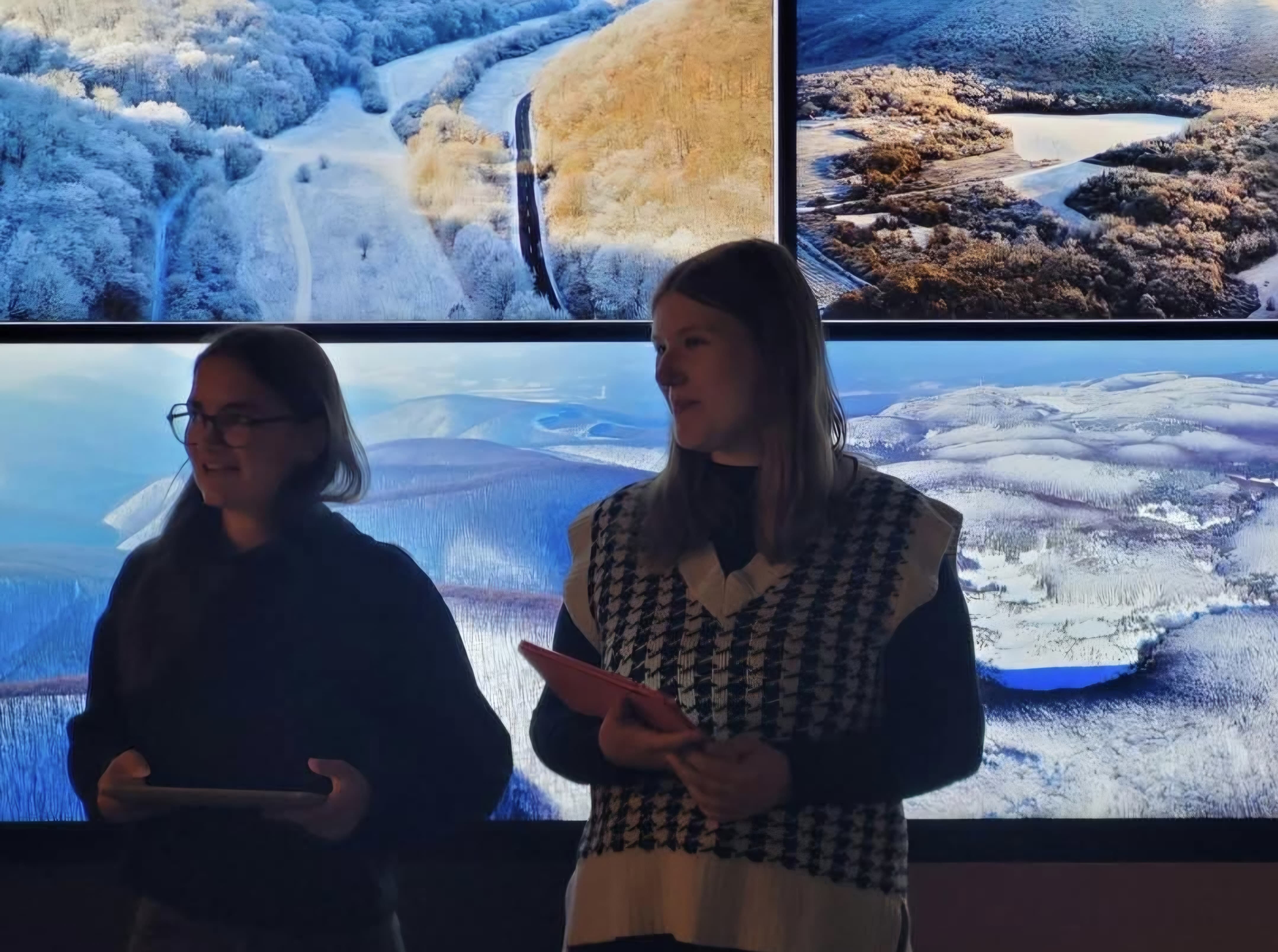
Our first guided tour through the Szeleta Park was very exciting. Unfortunately, I (Laura) got sick after the bird catching camp and wasn't feeling well. Nevertheless, I went to Szeleta Park. We were supposed to guide geologists through the visitor center. After extensive research, we had made many notes and prepared thoroughly, practicing several times. We practiced one last time before all the geologists arrived, and then we led them through the exhibit in English, using our notes. We explained everything about Bükk National Park, such as the geology, caves, springs, Bükk as a "Dark Sky Park," flora and fauna, and much more.
The group enjoyed it, and we were relieved and proud when we had finished. Of course, we also gathered feedback and suggestions for improvement. In the future, we will also be giving guided tours for visitors, not only in Szeleta Park but also in two caves: Szent István Cave and Ana Cave. This is a good opportunity to engage with the Bükk, because not only the visitors learn something new, but we also learn a lot and can improve our English skills.
Denube-Meeting:
We had the opportunity to be part of the Danube GeoTour Plus project and to be right in the middle of creative brainstorming sessions as well as lively discussions!
The Danube GeoTour Plus project is an international and transnational project within the framework of the Interreg Danube Region Programme. It is largely funded by EU resources. The aim of the project is to strengthen networking and communication between geoparks and national parks along the Danube. The meeting mainly focused on exchanging experiences with other parks, coordinating how certain problems can be solved, and collecting ideas on how sustainable tourism can be ensured. For example, participating parks came from Slovakia, Austria and Slovenia, Germany, as well as from Hungary.
The meeting lasted three days and took place mainly in Bükkszentkereszt, a village located right in the heart of the Bükk Geopark. Each day focused on a different main topic.
Day 1:
The topic of the first day was various monitoring systems for recording visitor numbers. This included technologies used to measure how many visitors enter a park, from which directions, and at what times popular locations are used. Factors such as energy consumption and costs play an important role when considering possible solutions, as parks only have limited budgets. Unfortunately, the newest technology, called mmWave sensors, still consume too much energy. In addition, legal guidelines must be taken into account, as cameras are viewed critically from people because they worry about the law of a person own image.
We also dealt with this issue in a practical example: the groups were asked to consider where monitoring tools could be placed most effectively. Disturbing factors such as falling leaves or branches, as well as the protection of sensors from animals and visitors, had to be considered. Being able to put ourselves in the role of a geopark and develop real solutions was very exciting.
Fun fact: In some geoparks, the same sensor technology is used as in space travel!
Day 2:
“Describe yourself without saying what you do!” – that was the introduction to Day 2, which was all about social media. Creatively showing, for example, the core values of a geopark or what makes it unique without using text is not that easy. We discussed questions like: “How do I best present my geopark/national park online?”, “How and where should an image video ideally be filmed?” and the most difficult question: “Who produces such videos, and with what funding?”
We saw presentations about the use of video-editing-programs and created our own videos in small groups. The goal was to capture the audience’s attention, build up tension and make the audience feel something while talking about the topic. It was especially nice that our own ideas were taken into account and that we could actively participate. Our result was a TikTok video! In the evening, we visited the Bükk Observatory, where we received a guided tour of the observatory. Unfortunately, the sky was very cloudy, so we couldn’t see any stars. However, the 3D film was a great way to end the day!
Day 3:
On Day 3, all members of the Danube GeoTour Plus project were welcomed by the director of the Bükk National Park Directorate at the Szeleta Visitor Center. Afterwards, Laura and I gave our very first guided tour in English through the exhibition at the Visitor Center. We were quite nervous, but for the first time we managed it pretty well. More about that can be found in the blog post “Our First Guided Tour.”
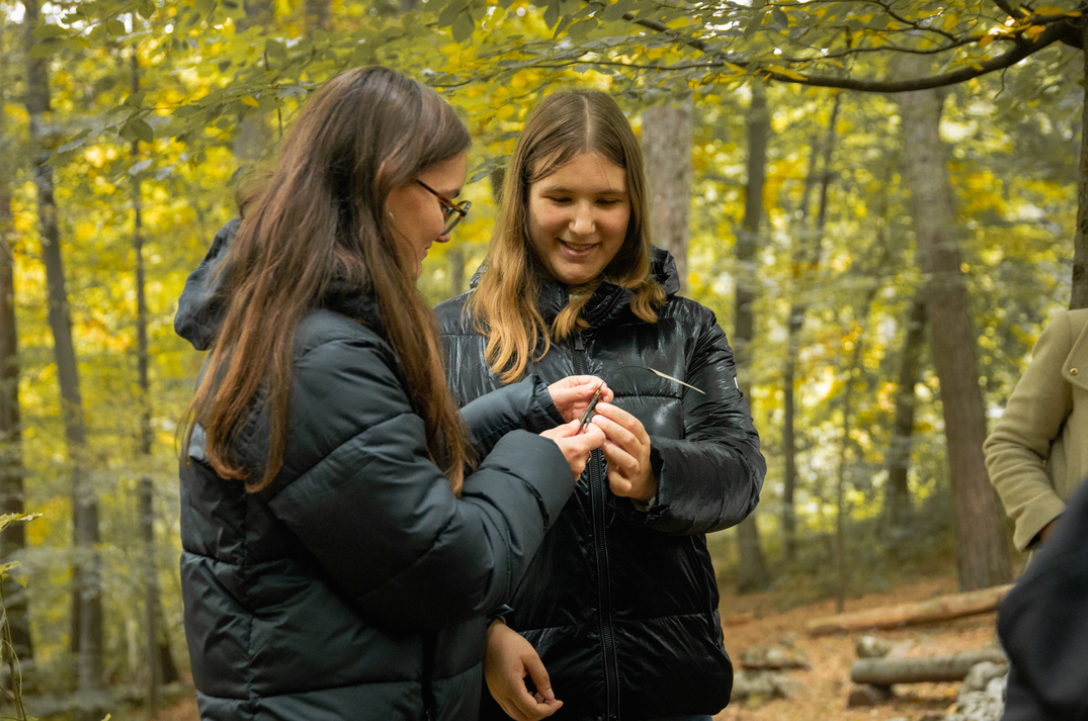
Afterwards, we went on a hike in Lillafüred to the Szeleta Cave, where one of the participants (a paleontologist) suddenly shouted, “I’ve found a real bear tooth!” Whether that was actually true, I still don’t know to this day, but everyone definitely had a good laugh. We also visited a observation tower (Zsófia-kilátó) and explored another cave (Kecske-lyuk). After the 4½-hour hike, we returned to the Szeleta center.
For me, it was very interesting to take part in such a program! Every evening I fell into bed tired, as it was quite exhausting to speak English all day and to follow intense and exciting discussions on complex topics in English.
Nevertheless, it was fascinating, and I learned many new things about sustainable tourism in geoparks. I learned how important visitor monitoring is for visitor management, that pilot projects need time to deliver usable data, and how crucial the role of social media is for presenting a geopark. I also learned how to best keep the attention of a large group when giving a tour, and which plants are edible and which are not.
I heard exciting stories from people from different countries, but they all share one thing: a passion for nature and the desire to protect it, preserve it, and treat it responsibly so that future generations can experience it as well.
Hike to the Beehive Rocks:
We went on a hike to the Beehive Rocks (or Kaptarkövek in Hungarian) in a large group with people from Poland.
The sun was shining, and a lot of information was explained in Hungarian and Polish, which we unfortunately didn't understand. Nevertheless, it was interesting to see the Beehive Rocks, and our contact person translated for us from time to time.
We learned a lot of new information, which you can read below:
Beehive Rocks are stones with holes, formed by volcanic activity during the Ice Age. They consist of soft volcanic tuff, which is easy to shape. Therefore, people used them for various purposes. No one knows exactly what people used these niches for, but there are three theories:
1. The holes were used to hold urns containing the ashes of the deceased.
2. Beekeepers could use the holes – hence the name "Beehive Rocks."
3. The holes were used to hold idols for offerings during ancient rituals.
We saw Beehive Rocks in various locations, for example, in Cserépfalu and in Szomolya on the "Beehive Rock Nature Trail."

Geopark Meeting and Hike:
We participated in a Geopark meeting and hike in the fall.
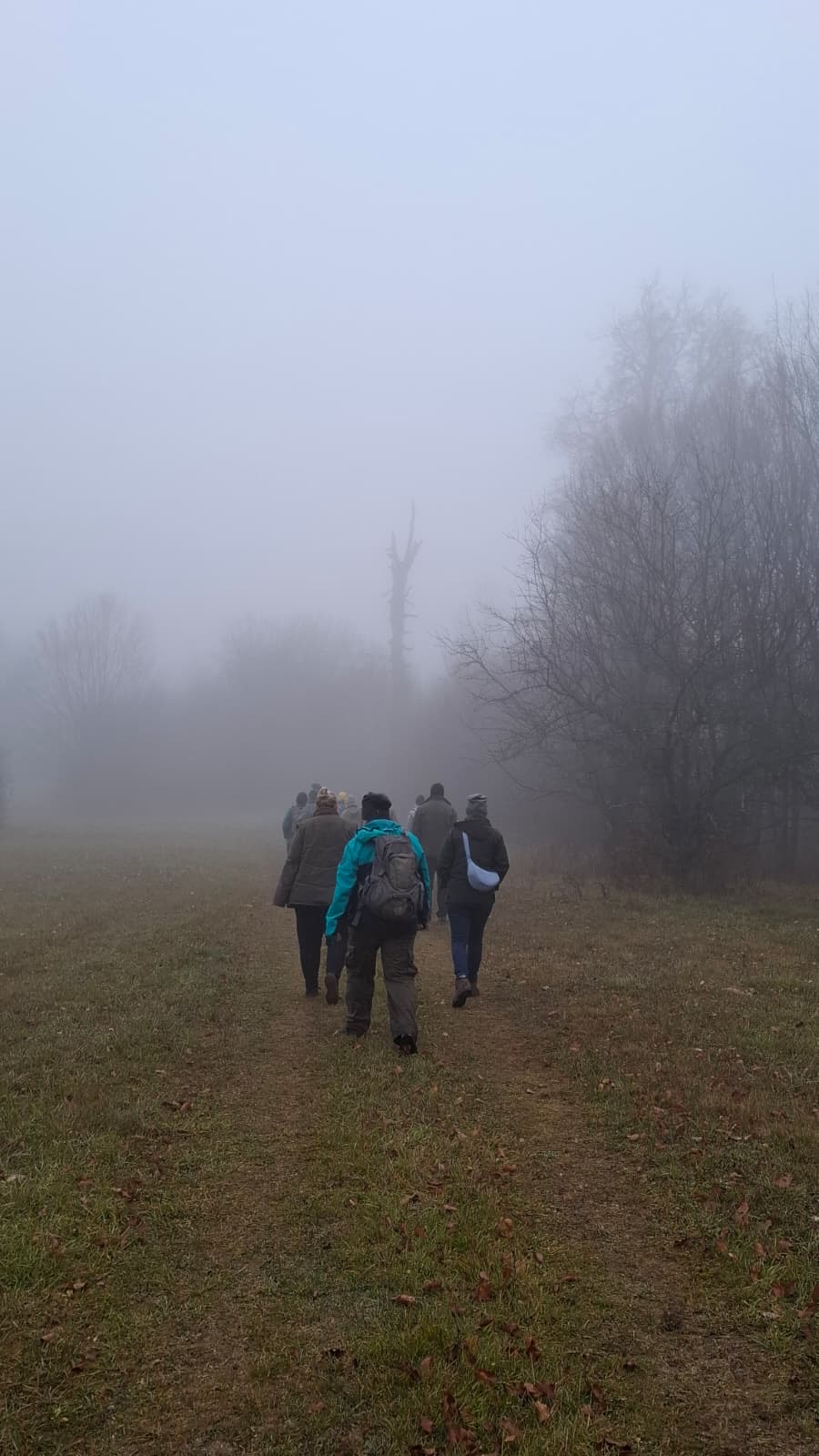
The hike started in a small village, and we were part of a group. We continued across a field, and it was very foggy. Despite this, we enjoyed the landscape, which had a magical, almost enchanting quality to it. I think, though, that every kind of weather has its own special charm. We took frequent breaks along the way, and a lot of explanations were given in Hungarian, and we were always delighted when we heard a word we understood. Finally, we continued through a forest and passed an old bunker, which we admired with interest, before returning to the field and then
walking back to the village. In total, we covered 10 kilometres and then returned to our accommodations, filled with new impressions.
Our first time at the Herman Ottó High School:
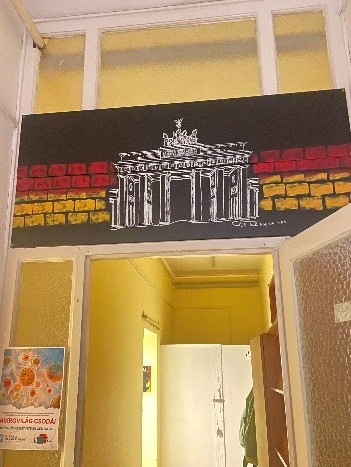
From the very beginning, it was clear that we wouldn't just be working in the Geopark, but would also be spending time at a high school, just like the volunteers before us. We received a friendly welcome on our first day. Beforehand, we weren't quite sure what we'd be doing. During our initial meeting, we were told we'd be teaching German, English, and maybe music. But it turned out that we'd be assisting with German lessons to help the students learn German. The work there is very varied, as we participate in regular classes (from grades 5 to 12) and also conduct individual or small group sessions to help some students prepare for their DSD exams. We even teach classes on our own! The first time was incredibly exciting, when it was decided that we would be teaching the class on our own. I (Laura) have also already proctored an exam. The high school even has a German language center where we regularly assist with classes. Currently, we're at the school twice a week, and it's been very beneficial, as the lessons are helping us become more spontaneous and speak more openly. We've also met many new people there.
Sampling with a geology student in the Szent István Cave:
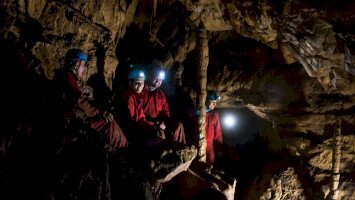
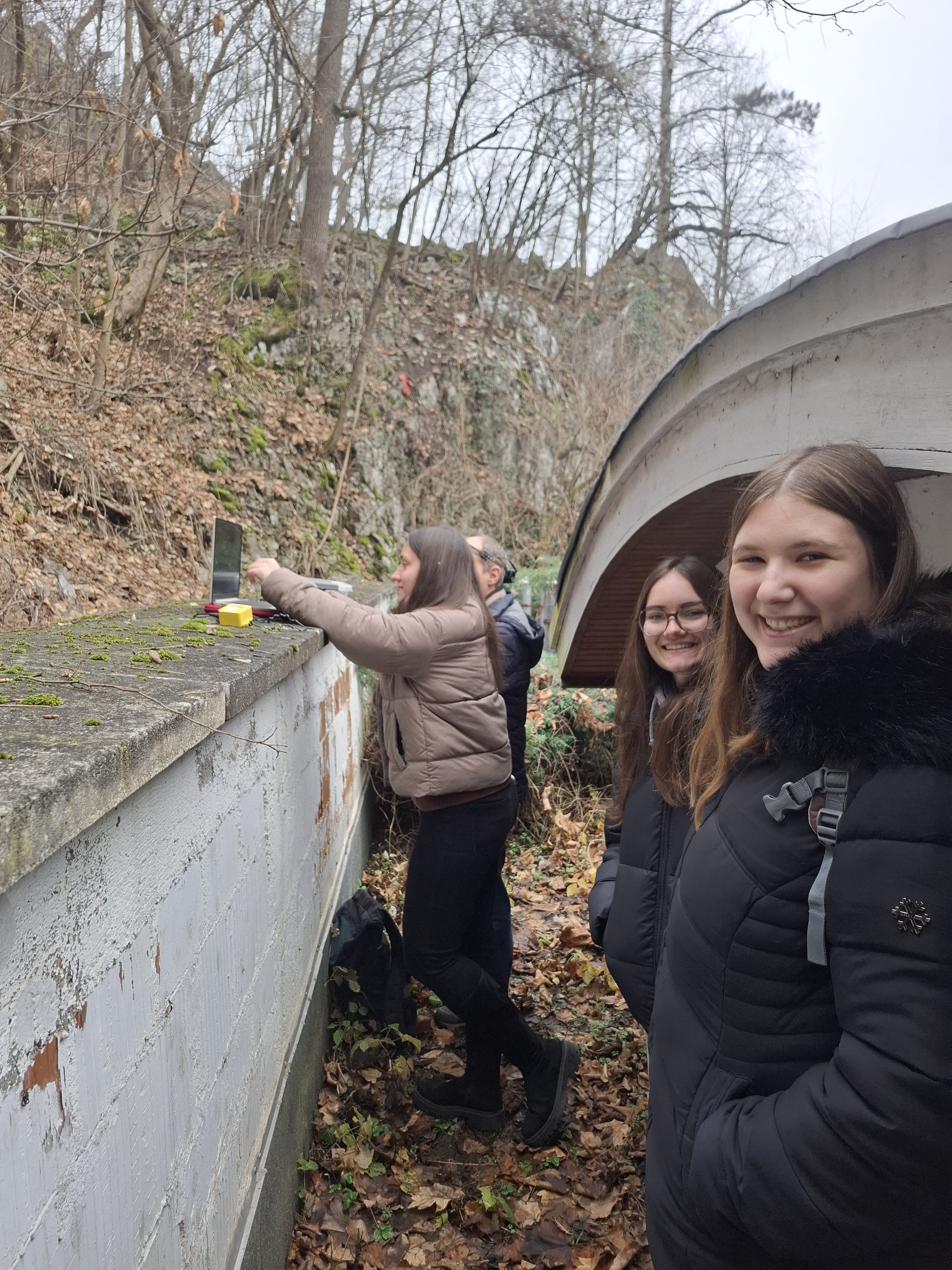
We participated in several caving trips to the Szent István Cave in Lillafüred with a geology student (Laura) and helped with the sampling. We learned a lot and admired the cave with its stalactites and stalagmites. It was very exciting, and we learned new things.
But what exactly was Laura investigating?
In her research, Laura wants to find out whether tourism and visitor numbers influence the carbon dioxide concentration. She measures the CO2 levels in areas of the cave that are open to visitors and compares them to areas that are usually closed. Using this data, she can identify days with high visitor numbers or days with special events. It's really fascinating, and it was very interesting to be a part of it. She is also investigating whether the CO2 levels decrease afterward. Furthermore, an analysis of stable isotopes is being carried out. This allows conclusions to be drawn about past and current climate zones. This tells us a great deal about climate change and allows us to draw conclusions about past and present climate zones. This tells us a lot about the climate change that is currently taking place, and we can learn from the past.
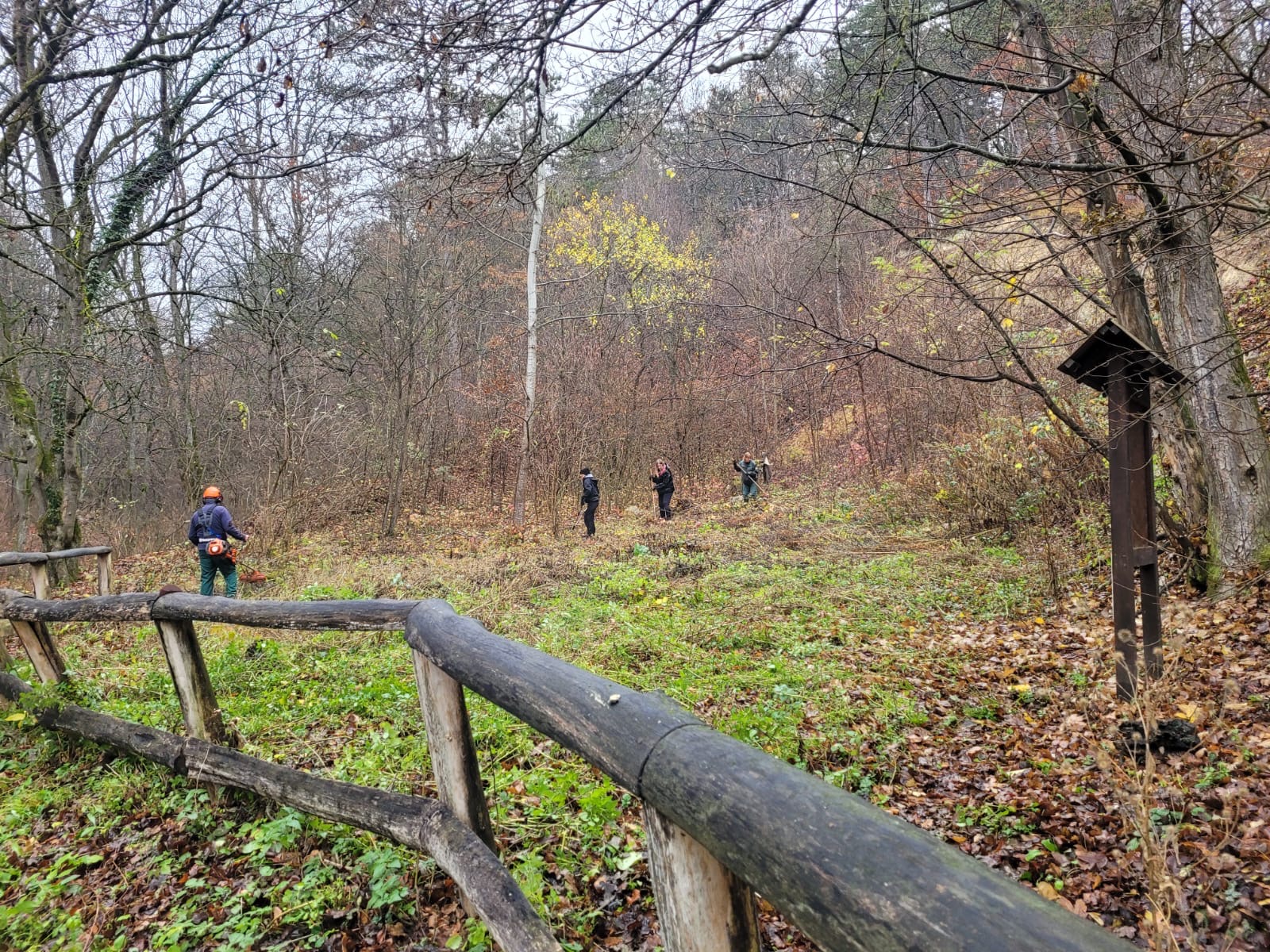
Removing nettles to reveal geological history:
We helped clean up a very important geological site. We removed nettles so that people could visit and get a better view of the rock formations. At this site, we could see the different rock layers, which show how the area has changed over the last million years. Many marine fossils, like shells, can be found in the rocks. This indicates that the area was once covered by the sea. The boundary between two important rock formations is clearly visible there: limestone and mile formations. It was really exciting, and we even found the remains of a fossilized shell. So, we removed the nettles with garden shears and rakes after they had been cleared. It was a lot of fun, but quite tiring after a while. It was worth it, though, because where nettles had previously grown everywhere, there was now space again. After that, we continued a roughly 12 km hike up to the 600-meterhigh Bükk Plateau. On this hike, we saw our first spring and many more here in Hungary.
When we reached the top, we saw the view, which was simply breathtaking. After a short break, we continued until we arrived back in the village.