Various industrial activities had decisive roles in shaping the area of the Bükk-Region Geopark.
The life of Bükkszentkereszt (formerly Újhuta), Bükkszentlászó (formerly Óhuta, not an independent settlement, now part of Miskolc) and Répáshuta is closely intertwined with the appearance of industry.All three municipalities were founded as a result of industry appearing in the area.The word “huta” in the (former) names of the settlements comes from the German word Hütte, which means furnace in which industrial activity was carried out.Industrial activity means the production of glass for the three municipalities.Workers were mainly deployed to the area from what is now Slovakia in the 18th century.The descendants are still proud of their Slovakian roots today, indicating their origin with bilingual village name plates both in Répáshuta and Bükkszentkereszt.Especially older people often speak a mixed language, Slovak and Hungarian words and grammatical rules often mix.Slovak origins also appear in gastronomy, and the food called sztrapacska is offered with a good heart in the restaurants.The school teaches Slovak language and traditionalist groups cultivate ethnographic traditions.
Areas shaped by industry can also be found in the Szinva and Garadna valleys near Miskolc.Iron smelting appearing in the valley is also responsible for the image of Hámor Lake and the two settlements, Lower and Upper Hámor.The roots of metallurgy in the area date back to the 18th century.Henrik Fazola, a locksmith from Eger, built an ironwork in today’s Miskolc-Ómassa, based on the mines and extensive woodlands of the region.His son, Frigyes, following in his father’s footsteps, continued the craft of metallurgy, building a dam in the confluence of the Szinva and Garadna streams, thus forming the image of Lake Hámor known today.Following in his father’s footsteps, he built a more modern iron smelter at Újmassa.The so-called Ancient Smelter is the oldest industrial monument in the area, with only three similar industrial monuments in Europe.
The Fazola Festival held in spring every year by the Metallurgical Museum of the Hungarian Technical and Transport Museum commemorates the Fazola family and their heritage.In addition to guided museum tours, there are countless programmes, material science and mining playhouses, folk art exhibitions, museum pedagogical activities.
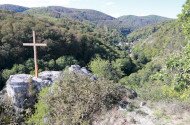
The water of Szinva, which crosses Miskolc, was not only used for iron smelting.As early as the 14th century, written documents record that watermills were operating along the water of the stream.The mills are no longer visible, but they can be found in one of the most well-known urban legends.The legend of Molnár Rock (Miller Rock) in the Hámor Valley is known to all inhabitants of Miskolc.As a memento of a sad tragedy, a wooden cross can still be seen on the cliff above the Hámor Valley.Several versions of the legend are known.According to one version, the young miller fell in love with the wife of the master miller inexorably, but his love was not returned, so he threw himself from the cliff above the mill into the depths.Another version of the story says that the master miller’s daughter and the miller fell in love, but the strict father did not allow them to belong to each other, so they fell into the depths hugging each other in grief.